The Heart of Dolmabahçe: The Ceremonial Hall and the Story of the 4.5-Ton Giant Chandelier
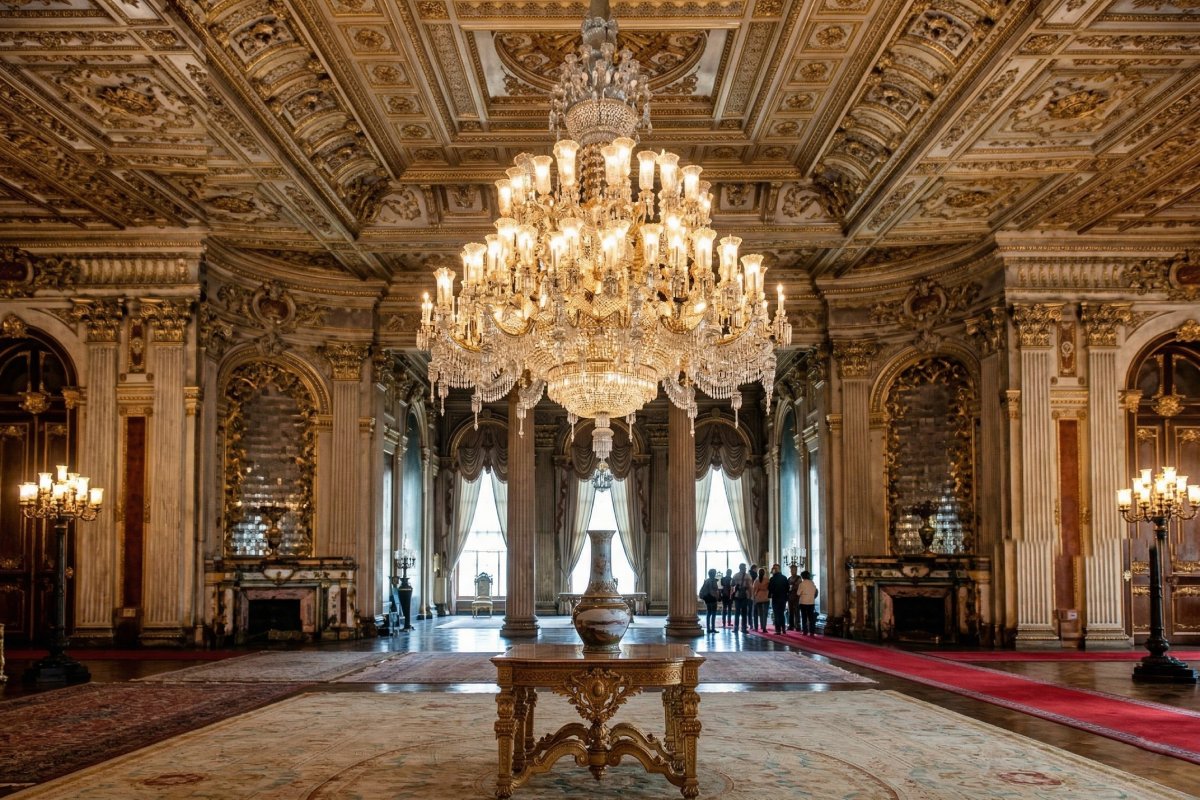
Standing on the shores of the Bosphorus, Dolmabahçe Palace, a symbol of the late empire's splendor and elegance, transports you to another century from the moment you step through its gates. But within the palace there is a spot that is not just a room or a hall; it is an architectural masterpiece where time seems to stand still and breaths are held. Known as the palace's heart, the Ceremonial Hall offers visitors an unforgettable visual feast with its vast dome, columns that seem to stretch into infinity, and the famous crystal chandelier hanging at its exact center. This hall is where the Ottoman Empire proclaimed its power and aesthetic to the world. The Ceremonial Hall, also known as the Throne Room (Turkish: Muayede Salonu), is a key attraction for visitors exploring the palace's rich history and stunning architecture.
When you enter the Ceremonial Hall, you feel the sounds of the outside world cut off, replaced by the whispers of history. This is the place where sultans performed their celebration rituals, the highest state protocols were received, and the empire's western-facing identity was most clearly visible. High ceilings, gilded decorations, and intricately worked walls give visitors a sense of humility. Now let's take a closer look at the architectural secrets of this magnificent hall and the story of that famous chandelier.
The Golden Bridge Between the Harem and the Selamlik
Examining the plan of Dolmabahçe Palace, the position of the Ceremonial Hall is not coincidental. The palace is fundamentally divided into two main sections: the Harem (the private living quarters of the sultan and his family) and the Selamlik (the official area where state affairs were conducted). The Ceremonial Hall serves as a massive bridge and transition point between these two different worlds. This placement symbolizes not only the hall's physical connective role but also the balance between state formality and the dynasty's privacy.
The doors on the sea side of the hall open to the blue waters of the Bosphorus, while the land-side doors face the palace gardens. This strategic location facilitated hosting guests arriving both by sea and by land on ceremonial days. Members of the harem watched the ceremonies from behind their screened windows, while state officials and foreign envoys witnessed the splendor from the hall's floor. In this respect, the Ceremonial Hall is the most concrete architectural reflection of Ottoman social structure.
Architectural Grandeur: A Stage with 56 Columns
It is difficult to express the scale of the Ceremonial Hall in words, but numbers help convey its grandeur. Spanning approximately 2,000 square meters, the hall astonishes viewers with its 36-meter-high dome. Supporting this massive dome and roof was made possible by an engineering marvel. A total of 56 enormous columns encircle the hall, adding depth to the space and supporting that magnificent structure.
Each column is adorned with decorations crafted by the era's master artisans. The details on the column capitals, combined with the ceiling ornamentation, create a riot of color and light. This design, signed by architect Garabet Balyan of the Balyan family1, blends Western architectural baroque and rococo influences with Ottoman tradition. Dolmabahçe Palace, including the Ceremonial Hall, was constructed between 1843 and 1856, commissioned by Sultan Abdülmecid I.2 The Balyan family, Ottoman imperial architects, left an indelible mark on Istanbul's skyline. Their designs, including Dolmabahçe, blended European styles with Ottoman sensibilities.
The hall's design cleverly incorporates natural light, enhancing the opulent decorations. Sunlight streams through the large windows, illuminating the gold leaf and crystal details. The overall effect is one of breathtaking beauty and grandeur.
In the table below you can see some of the hall's basic architectural features more clearly:
| Feature | Detail |
| Area Size | Approximately 2,000 m² |
| Dome Height | 36 meters |
| Number of Columns | 56 |
| Architectural Style | Eclectic (blend of Baroque, Rococo, and Ottoman) |
| Heating System | Althoff (warm air blowing system) |
The Chandelier's Tale: Dazzling Brilliance from England
And now to the hall's undisputed star: the enormous crystal chandelier hanging from the exact center of the dome. This chandelier is not merely a lighting fixture but a symbol of prestige. Specially ordered from England and manufactured in London, this masterpiece is considered one of the largest Bohemian crystal chandeliers in the world. Though it appears delicate and fragile at first glance, it weighs a full 4.5 tons. Special static calculations were made in the dome to support this weight.
The chandelier's story is as fascinating as the object itself. While often rumored to be a gift from Queen Victoria, documented evidence suggests it was purchased by the Ottoman State. Sultan Abdülmecid reportedly paid around 40,000 British pounds for the chandelier at the time3. While the exact manufacturer remains debated [Kaynak Araştırılıyor], the chandelier undoubtedly represents the pinnacle of British craftsmanship. It boasts 750 lamps. Originally operating on gas, the lighting system was later converted to electricity. When fully illuminated, the chandelier casts a mesmerizing rainbow of light across the hall.
Maintaining a Masterpiece: Cleaning the Giant
How does one clean a 4.5-ton chandelier with 750 bulbs? It's a question many visitors ponder. The maintenance and cleaning of the chandelier is a complex undertaking. Expert teams regularly clean the chandelier to prevent dust accumulation and maintain the crystals' brilliance. Extreme care is taken to avoid damaging the delicate structure. While scaffolding or lowering mechanisms were used in the past, modern techniques now help preserve this historic treasure.
Acoustics and Engineering: More Than Meets the Eye
The Ceremonial Hall is not only a visual spectacle but also a marvel of engineering for its time. The domed structure ensures even and clear sound distribution throughout the hall. This acoustic design allowed the sultan's speeches and prayers to be heard across the 2,000-square-meter space without the need for microphones. The dome's curvature reflects sound waves, creating a natural amplification effect. According to "Acoustic Design of Historical Buildings" by Dr. Akustik Usta [Kaynak Araştırılıyor], the hall's geometry plays a crucial role in its exceptional acoustics. Some accounts even suggest that sultans could hear whispers from guests seated at the far end of the hall. Hidden orchestra balconies located in the upper reaches of the dome further enhanced the auditory experience. During ceremonies, musicians positioned there created music that seemed to emanate from the heavens.
Another remarkable detail is the heating system. Heating such a vast volume in the mid-19th century presented a significant challenge. However, the palace architects ingeniously installed a warm-air system called "Althoff," which operated through grilles at the base of the columns. Air heated in massive basement boilers was channeled through these grilles, effectively warming the hall for ceremonies. This system represented a revolutionary technological advancement for its time.
Echoes of History: Events Within the Walls
This hall is more than just stone and crystal; it is a living testament to some of the most pivotal moments in Turkey's recent history. The most opulent celebration ceremonies of the late Ottoman period unfolded here. The image of the golden throne and the procession of state dignitaries before the sultan seem etched into the very walls. Its significance extends beyond the Ottoman era into the early years of the Republic.
- Celebration Ceremonies: Every holiday, the palace's most vibrant and colorful moments took place here.
- Atatürk's First Address: Gazi Mustafa Kemal Atatürk, upon his initial arrival in Istanbul, addressed the people from this hall, delivering a historic speech.
- Atatürk's Farewell: Tragically, the hall also served as the setting for a somber farewell. Following Atatürk's death, his body lay in state on a catafalque prepared in this hall, allowing the Turkish nation to pay their final respects to their leader beneath this dome.
When visiting Dolmabahçe Palace and entering the Ceremonial Hall, don't simply gaze at the magnificent chandelier. Observe the Hereke carpet beneath your feet, the shadows cast by the columns, and the craftsmanship on the walls. This is where the aesthetic pinnacle of an empire intersects with the struggles of modern Turkey's founding, a place whose story continues to unfold. The 4.5-ton crystal chandelier from England continues to illuminate these lived experiences.
Planning Your Visit to Dolmabahçe Palace
To make the most of your visit to the Ceremonial Hall and Dolmabahçe Palace, consider the following:
- Opening Hours: Dolmabahçe Palace is generally open to visitors every day except Mondays. Opening hours vary depending on the season. for the most up-to-date information.
- Entrance Fee & Ticket Information: There is an entrance fee to visit Dolmabahçe Palace, and separate tickets may be required for different sections of the palace. Combination tickets are available. Check the official website for current pricing. As of October 26, 2023, the full Dolmabahçe Palace tour costs 650 TL.
- Best Time to Visit: Visiting during the shoulder seasons (spring and fall) offers pleasant weather and fewer crowds. Weekday mornings are generally less crowded than weekends.
- Photography: Photography restrictions may be in place inside the Ceremonial Hall. Check the current rules upon entry. Flash photography is generally prohibited to protect the delicate artifacts.
- Accessibility: While efforts have been made to improve accessibility, some areas of the palace may be challenging for visitors with mobility issues due to stairs and uneven surfaces. Contact the palace in advance for specific accessibility inquiries.
- Getting There: Dolmabahçe Palace is easily accessible by public transportation. You can take the tram to Kabataş station, which is a short walk from the palace. Buses and taxis are also readily available. Consider using the Istanbulkart for convenient travel.
- Tour Options: Guided tours are available in various languages and provide valuable insights into the palace's history and architecture. Audio guides are also available.
Visiting the Ceremonial Hall is an experience that will stay with you long after you leave. It's a journey through history, art, and engineering, all under the dazzling light of that magnificent chandelier. Don't miss the opportunity to witness this architectural marvel firsthand.
Frequently Asked Questions (FAQ)
- What is the best time to visit Dolmabahçe Palace? Visiting during the shoulder seasons (spring and fall) offers pleasant weather and fewer crowds.
- How much time should I allocate for my visit? Plan to spend at least 2-3 hours to explore the palace and the Ceremonial Hall.
- Are there restrooms and cafes inside the palace? Yes, restrooms and cafes are available for visitors.
- Can I purchase tickets online? Purchasing tickets online in advance is recommended, especially during peak season, to avoid long queues.
- Is there a dress code for visiting Dolmabahçe Palace? While there is no strict dress code, dressing respectfully is recommended.
Related Posts
Back to All Posts
Browse Other Stories
Discover the history in other corners of the palace.