The Symbolism in Dolmabahçe Palace's Structural Design
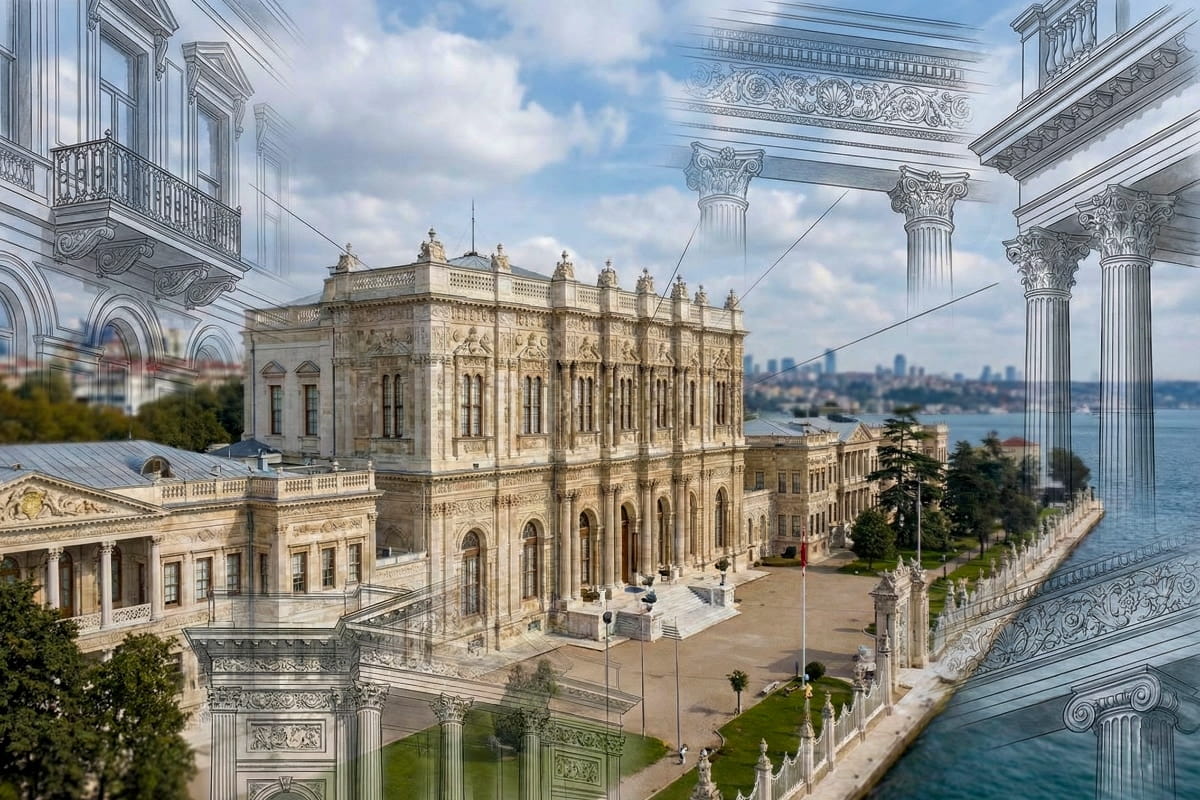
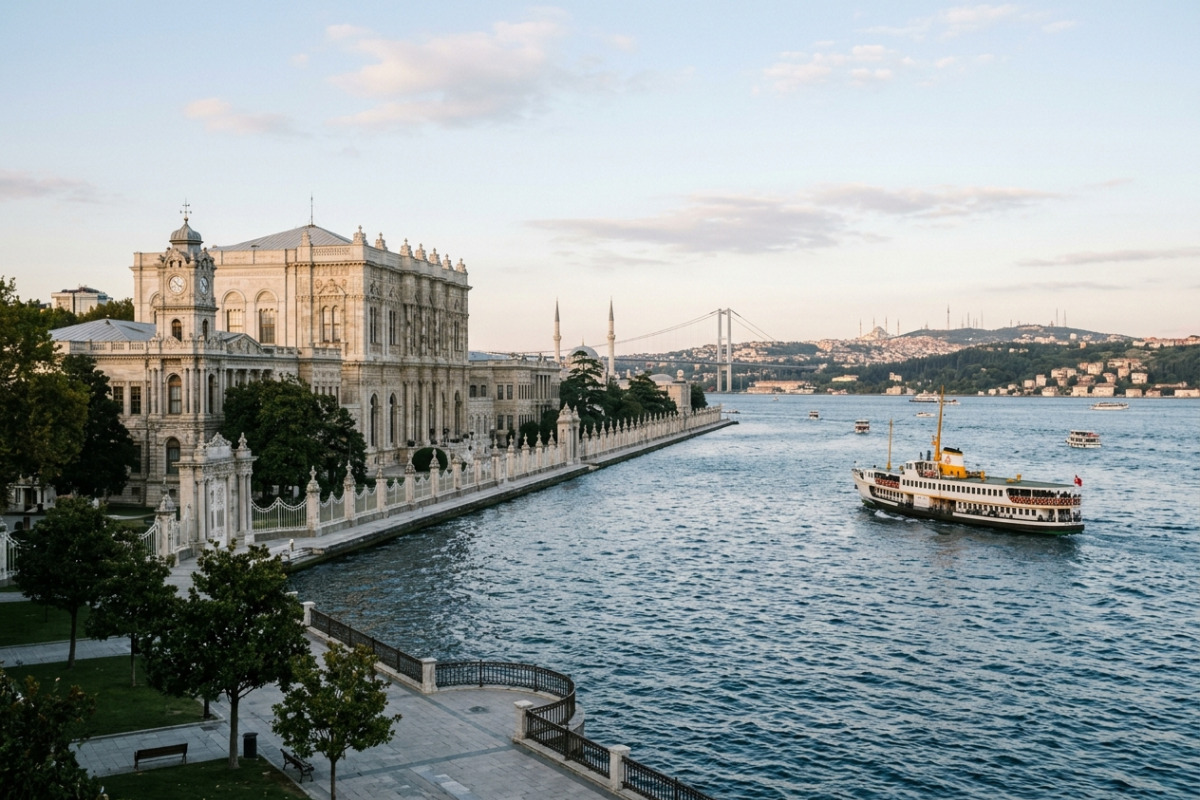
When you stand before the imposing facade of Dolmabahçe Palace, you are looking at far more than a residence of stone and marble. You are witnessing a desperate, magnificent declaration of survival and relevance. Built in the mid-19th century, this structure was the Ottoman Empire's grand attempt to speak the architectural language of Europe while retaining its Eastern soul. Every column, gate, and dome was meticulously designed not just for aesthetic beauty, but to convey a message of enduring power to a world that believed the empire was fading. As you walk along the Bosphorus strait, the palace does not shy away; it confronts the water and the West with an open chest, symbolizing a state that was ready to modernize and integrate with European powers.
A Bridge Between East and West: The Architectural Identity
The structural design of Dolmabahçe is a fascinating paradox. Unlike the Topkapi Palace, which is a collection of pavilions surrounded by courtyards—a distinctly Eastern and nomadic layout—Dolmabahçe is a monolithic block. This shift in structural philosophy was intentional. Sultan Abdülmecid I wanted to show that the Ottomans were capable of centralizing power, mirroring the absolute monarchies of France or Austria. However, the plan inside retains the traditional Turkish house layout (the "Sofa" concept), proving that while the skin was Western, the heart remained Ottoman. If you explore the History of Dolmabahçe, you will see that this duality was the defining struggle of the era.
The architectural styles employed—Baroque, Rococo, and Neoclassical—were not chosen at random. In the 19th century, these were the visual dialects of power. By adopting them, the Sultan was structurally claiming equality with European monarchs. The heavy ornamentation on the exterior is not merely decoration; it is a horror vacui (fear of empty space) that signifies abundance and infinite wealth, a counter-narrative to the economic struggles the empire was actually facing at the time.
The Imperial Gates: Portals of Authority
Before you even enter the main building, the gates set the tone. The Gate of the Treasury and the Imperial Gate are monumental arches that serve as psychological thresholds. Structurally, they are designed to make the visitor feel small, emphasizing the grandeur of the Sultan. The intricate floral motifs and the tugra (imperial seal) carved into the stone serve as branding. They remind anyone passing through—whether a foreign dignitary or a local official—that they are entering a realm where the Sultan's word is absolute law.
- The Clock Tower: Standing guard outside, it symbolizes the empire's adoption of Western timekeeping and modernity.
- The Seaside Facade: Stretching 600 meters, it was designed to be viewed from ships, projecting strength to passing naval vessels.
- The Gardens: Geometric and manicured, representing humanity's control over nature, a stark contrast to the organic growth of earlier Ottoman gardens. These gardens also served as a space for diplomatic encounters and social gatherings, showcasing the Sultan's power and sophistication.
The Selamlık and the Crystal Staircase
The administrative heart of the palace, the Selamlık, is where the structural symbolism becomes most intense. This was the male-only section where state affairs were conducted. The layout here is rigid, symmetrical, and imposing. The centerpiece of this section is undoubtedly the Crystal Staircase. Shaped in a double horseshoe, the staircase is a masterpiece of engineering and theatricality. It was not just a way to get from one floor to another; it was a stage.
The use of Baccarat crystal for the balusters and the massive chandelier overhead catches the light in a way that turns the air itself into gold. Structurally, the staircase forces a slow, deliberate ascent. Dignitaries climbing these stairs would have to look up, physically lowering their guard while being dazzled by the display of wealth. It is a brilliant example of how architecture can manipulate human behavior and social hierarchy. To see this area, you must navigate the specific Palace Sections dedicated to state affairs.
The Ceremonial Hall: The Center of the Universe
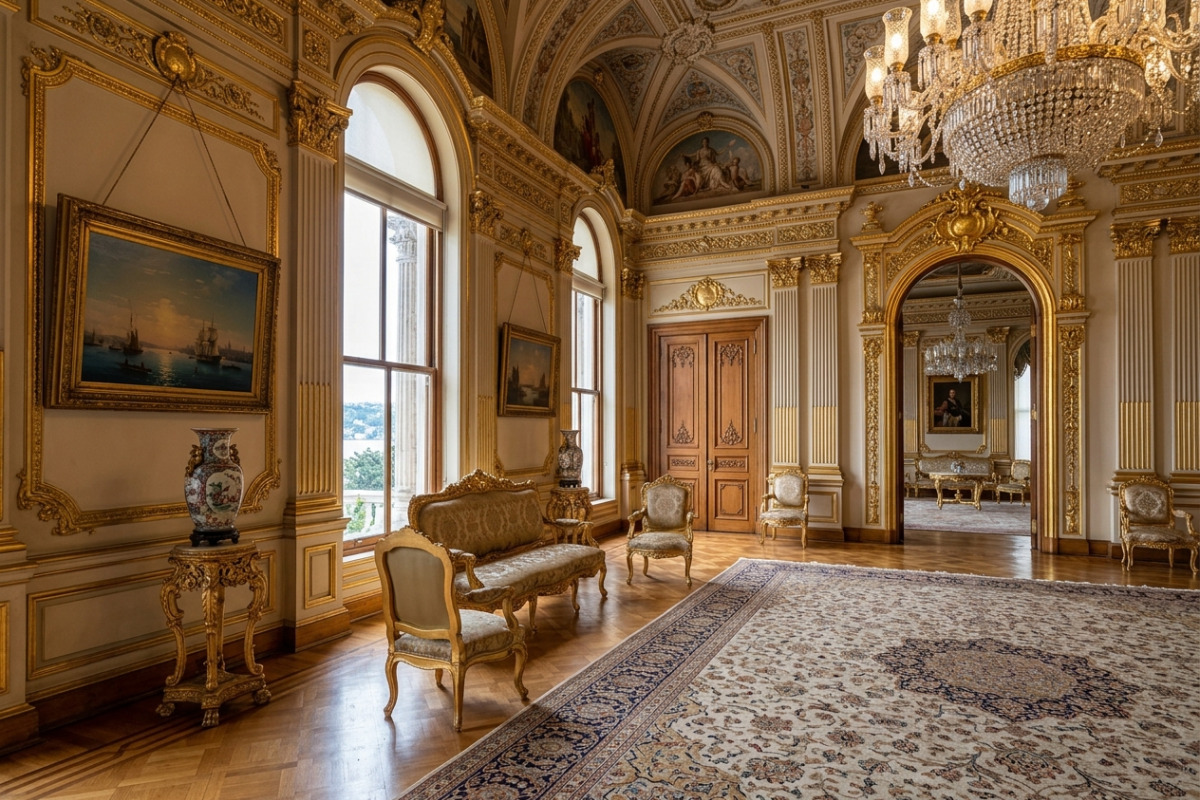
The Muayede Hall (Ceremonial Hall) is the structural climax of the palace. It sits exactly between the Harem (private quarters) and the Selamlık (public quarters), acting as the hinge that holds the empire's private and public lives together. The dome here is one of the highest in Istanbul, reaching 36 meters. Unlike a mosque dome which symbolizes the heavens and religious submission, the dome of the Muayede symbolizes the Sultan's encompassing protection over his subjects.
Below is a breakdown of the symbolic elements found within this massive hall:
| Architectural Element | Style/Origin | Symbolic Meaning |
| The 4.5-Ton Chandelier | English (Gift from Queen Victoria) | Diplomatic recognition and the weight of imperial alliances. |
| The Dome Structure | Neoclassical/Ottoman Hybrid | The centralization of power; the Sultan as the unifying figure. |
| Hereke Carpets | Local Ottoman Craftsmanship | Grounding the Western design in Turkish tradition and industry. |
| Column Arrangement | Corinthian Order | Stability, order, and connection to ancient Greco-Roman heritage. |
The sheer volume of this room was intended to silence crowds. During religious holidays or state ceremonies, the acoustics were designed so that the silence was as heavy as the stone. The structural isolation of the hall, accessible from both the sea and the land, reinforces the idea that the Sultan is the master of both elements.
The Harem: Privacy Behind Stone Veils
While the Selamlık screams for attention, the Harem is designed for concealment. However, even here, the structural symbolism of Westernization is present. Traditionally, the Harem was a completely separate entity. In Dolmabahçe, it is integrated into the main building, albeit separated by heavy iron doors and long corridors known as the "Golden Way." This integration symbolizes the modernizing family structure of the Ottoman dynasty, moving towards a more European style of living under one roof.
The windows in the Harem are distinct. They are often screened or positioned to allow light in while preventing anyone from seeing out clearly, or vice versa. This architectural control of vision reinforces the sanctity and privacy of the Sultan's family. Yet, the interiors are filled with European furniture, pianos, and Western art, showing that the cultural shift had permeated even the most private sanctuaries of the empire. The Harem also served as a space for the Sultan to display his wealth and power to visiting dignitaries and their wives, further solidifying his image as a modern and powerful ruler.
Modern Amenities as Symbols of Progress
We often overlook the "invisible" structure: the technology. Dolmabahçe was equipped with gas lighting, water closets, and central heating systems that were cutting-edge for the 19th century. Including these structural utilities was not just for comfort; it was a symbol of scientific progress. The Ottomans were signaling that they were not stuck in the past; they were utilizing the latest engineering feats to propel the empire forward. Exploring these details requires time, so checking Visiting Info for opening hours is recommended to ensure you don't rush through these marvels.
Conclusion: A Stone Legacy
Dolmabahçe Palace is a narrative written in stone, marble, and crystal. It tells the story of an empire standing at the crossroads of eras and continents, trying to balance its glorious past with a demanding future. The structural design—from the imposing gates to the transparent staircases—was a tool of political communication. It was built to impress, to intimidate, and ultimately, to endure.
Today, walking through these halls is a journey through the mind of the late Ottoman Sultans. It is a visual lesson in how architecture shapes perception. If you are ready to witness this blend of history and artistry firsthand, you should plan ahead. Due to the palace's popularity and daily visitor limits, it is wise to Buy Tickets online before your trip to secure your entry into this magnificent symbol of imperial ambition.
Related Posts
Back to All Posts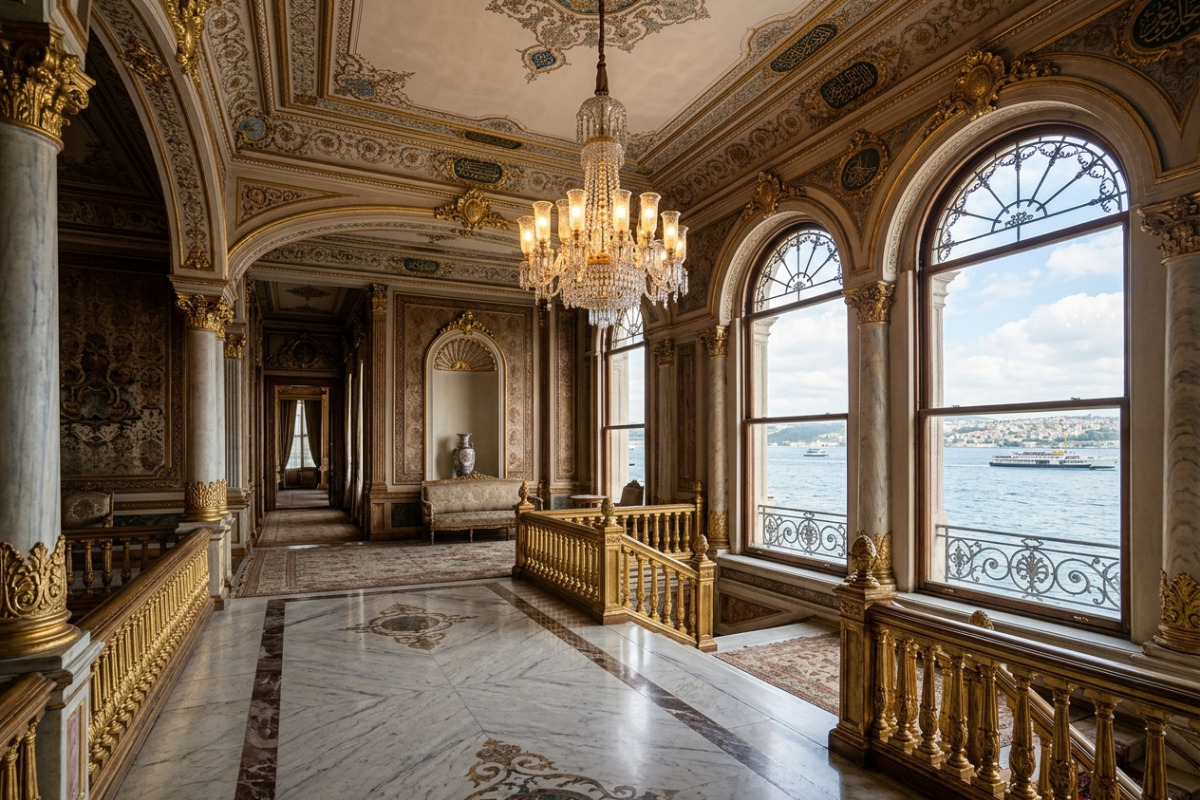
Browse Other Stories
Discover the history in other corners of the palace.