The Red Stop of Diplomacy: The Decorative Secrets of the Süfera Hall
On the shores of the Bosphorus, Dolmabahçe Palace stands as the most elegant dance of history and aesthetics, not only as a sultan's residence but also as the Ottoman Empire's face to the world. When you step inside the palace through its colossal doors, you cannot help but be captivated by the splendor that greets you. Yet among the labyrinths of the palace, there is a point that is not only a architectural masterpiece but also the most special corner where the empire's diplomatic memory is kept: the Süfera Hall, where foreign ambassadors held their breath in anticipation before appearing before the sultan, feeling the Ottoman power and elegance to their very core. With walls steeped in history and stunning decoration, this hall virtually transports visitors to the diplomatic atmosphere of the 19th century.
The Süfera Hall literally means "Hall of Ambassadors" and carries a weight that lives up to its name. Located in the palace’s Selamlık section, this hall served as the most critical waiting room in Ottoman state protocol. It was the first stop to convey the message to Western representatives that "We are here, we are still powerful, and we can speak the same aesthetic language as you." Every detail chosen for the hall’s decoration is not incidental; rather, it is the product of a subtle political intelligence and refined artistic taste. For example, before the Paris Treaty of 1856 after the Crimean War, it is known that European ambassadors waited in this hall and observed the intricacies of Ottoman diplomacy. Even today, from the perspective of 2026, the noble energy radiating from this hall continues to captivate visitors.
The Diplomatic History of the Süfera Hall
The Süfera Hall played a pivotal role in Ottoman diplomacy, particularly during the Tanzimat period. It served as a stage for meticulously orchestrated encounters between Ottoman officials and foreign dignitaries. The hall's design and decoration were consciously employed to project an image of Ottoman power and sophistication, aiming to impress upon visiting ambassadors the empire's continued relevance on the world stage.
The Power of Red: The Psychological Language of Colors
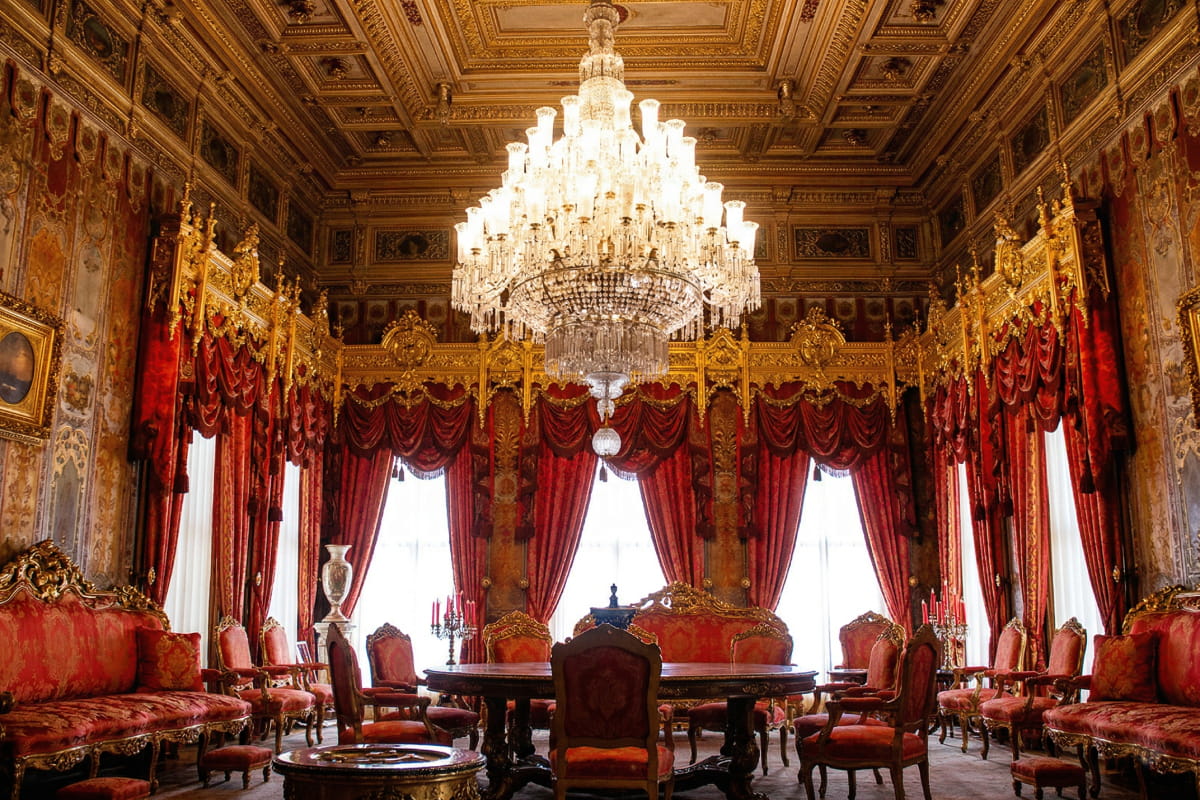
When you step into the Süfera Hall, the first thing that catches your eye is the color palette dominating the space. Red has historically been the color of power, authority, and determination in both the East and the West. The red tones used in this hall go beyond mere decoration; they are a diplomatic display of strength. The dominance extending from the curtains to the upholstery is designed to silently but profoundly communicate the sultan’s authority to waiting ambassadors. The language of color conducts diplomacy without words; this is not an ordinary waiting room but the threshold of a world empire.
The intense use of red is balanced by gold-leafed motifs, giving the room a rich yet not suffocating air. Only the finest fabrics were chosen for the coverings, with a fusion of Hereke carpets and special fabrics from Europe creating an eclectic style. This color extravaganza is the most lively reflection of Baroque and Rococo influences on the palace’s exterior within the interior space.
Gold-Leaf Carpentry and Wall Decorations
The Süfera Hall’s walls and ceiling appear as if crafted by a jeweler. Gold leaf usage, a symbol of wealth in Ottoman palace architecture, reaches a different dimension in Dolmabahçe by merging with Western forms. The gilding on the plasterwork accents glints with the angle of light, adding a dynamic atmosphere to the space. Especially the ceiling centerpieces and the vegetative motifs in the corners illustrate the synthesis of Eastern and Western art.
- Ceiling Rosettes: Each ceiling medallion is a unique craftwork, balancing the hall’s acoustics while presenting a visual feast.
- Mirror Consoles: Massive crystal mirrors mounted on the walls, adorned with gold frames, make the room appear larger and brighter.
- Over-Door Ornaments: The carved, gold-leafed crests above every doorway transform passageways into works of art.
Design Elements of the Süfera Hall
The Süfera Hall is a carefully curated space, where every design element contributes to the overall impression of Ottoman power and elegance. The choice of materials, the arrangement of furniture, and the interplay of light and color all work together to create a memorable and impactful experience for visitors.
Diplomatic Etiquette in Furniture Selection
The hall’s furnishings mirror Sultan Abdulmecid’s vision, a ruler who closely followed contemporary European fashion. Departing from the traditional cedar arrangement, French-style chairs, marquetry tables, and elegant coffee tables were used. This shift stands as tangible evidence that the Ottoman era was turning toward the West. Ambassadors, when they experienced the comfort and elegance seen in their own countries’ palaces, could personally feel Ottoman modernization. For example, the British ambassador Stratford Canning (Lord Stratford de Redcliffe) is frequently noted in travelogues for being impressed by the comfort and grace of these furnishings.
The layout of the furniture is also strategic. The seating arrangement facilitates conversation among ambassadors while preserving hierarchy, forming part of diplomatic protocol. The quality of wood used, along with mother-of-pearl or bronze inlays, showcases Ottoman artisans’ mastery, while the red velvet upholstery of the seating harmonizes with the hall’s overall aura.
| Decorative Element | Origin / Style | Effect in Space |
| Crystal Chandeliers | Baccarat (French) and Bohemian | Reflects light and enhances the gold leaf, increasing splendor. |
| Red Upholstery | Ottoman and European Synthesis | Conveys power, authority, and warmth. |
| Gold Leaf | Rococo and Baroque Influence | Symbol of wealth and prestige. |
| Large Mirrors | Vienna and Paris Production | Adds depth to the space and multiplies light. |
The Enchantment of Ceiling Decorations and the Crystal Chandelier
When you look up, you encounter the hall’s real jewel: the ceiling ornaments and that enormous crystal chandelier. As throughout Dolmabahçe Palace, lighting elements in this hall are not merely sources of light but essential parts of the decoration. The chandeliers, weighing tons and suspended from the ceiling, illuminated the room as brilliantly as the sun even when gas lighting was used. The crystals, when combined with the light filtering in from the windows, create rainbow halos dancing on the gold leaf on the walls.
The ceiling itself is almost a canvas. The gilded accents hidden between pastel tones and the fine line work create a sense of a window opening to the sky. These details are crafted to ensure ambassadors do not grow bored while waiting, but rather study their surroundings and marvel at Ottoman art. The ceiling’s height is deliberately imposing to remind visitors of the state’s grandeur and their own smallness.
The Palace’s Diplomatic Prestige and the Experience Today
The Süfera Hall is not merely a museum-like collection of furnishings and ornaments; it is a place of lived experiences, tense waiting, and momentous decisions. This hall, the ambassadors’ last stop before presenting themselves to the sultan, is a psychological preparation stage. Amid the weight of red and the shimmer of gold, diplomats breathed in the majesty of the Ottoman Empire. This section of the palace is the state’s way of saying, “We did not fall; we changed and evolved.”
Today, as a traveler in this hall, you can still sense that historic atmosphere. The creaking of the floors, the depth of the mirrors, and the shimmer of the chandeliers preserve traces of the past. When visiting Dolmabahçe Palace, I recommend slowing down a little in the Süfera Hall, not just looking but trying to understand the emotions of an ambassador who waited here in that era. Because this hall is less a mere architectural structure and more a diplomacy lesson carved into stone and fabric.
Related Posts
Back to All Posts
Browse Other Stories
Discover the history in other corners of the palace.