Dolmabahçe Palace: An Architectural Journey Through Time
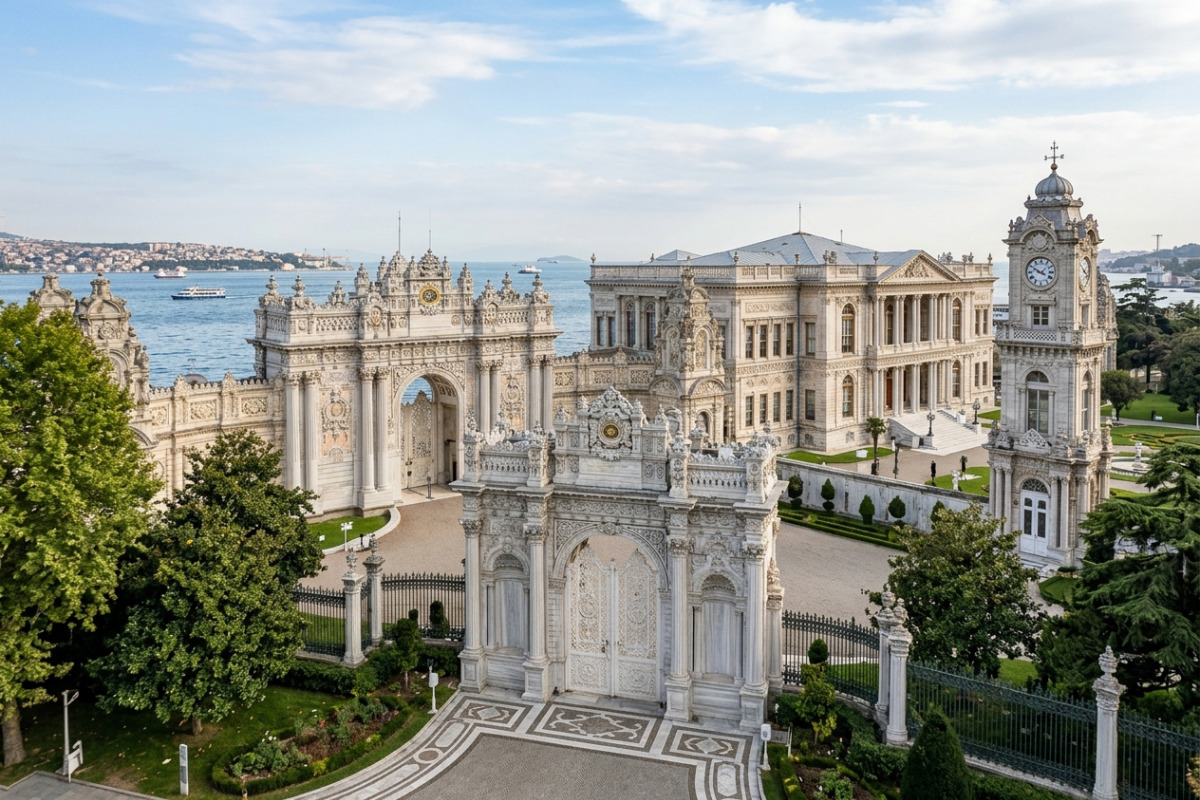
Dolmabahçe Palace is a remarkable structure that stands out not only for its grandeur but also for its intricate architectural details. In this article, we will explore the architectural features of the palace and examine the details that will enhance your understanding of its historical context. Discovering how Dolmabahçe Palace has evolved over the years and the architectural influences throughout this process can deepen your interest in this historical site.
The Architectural Evolution of Dolmabahçe Palace
Dolmabahçe Palace was built during the late period of the Ottoman Empire. Construction began in 1843 and was completed in 1856. During this time, Western influences in Ottoman architecture were increasingly prominent. The palace is notable for its blend of Baroque and Neoclassical architectural styles. With its high ceilings, spacious halls, and rich decorations, Dolmabahçe reflects the architectural understanding of the era.
Looking at the architectural details, the palace's exterior is clad in white marble. This not only provides an aesthetic appeal but also enhances the palace's splendor. Furthermore, the quality of materials used in the construction has facilitated the preservation of this structure over time. The details in the palace's architectural design showcase the richness of Ottoman art and architecture.
Architectural Details and Their Meanings
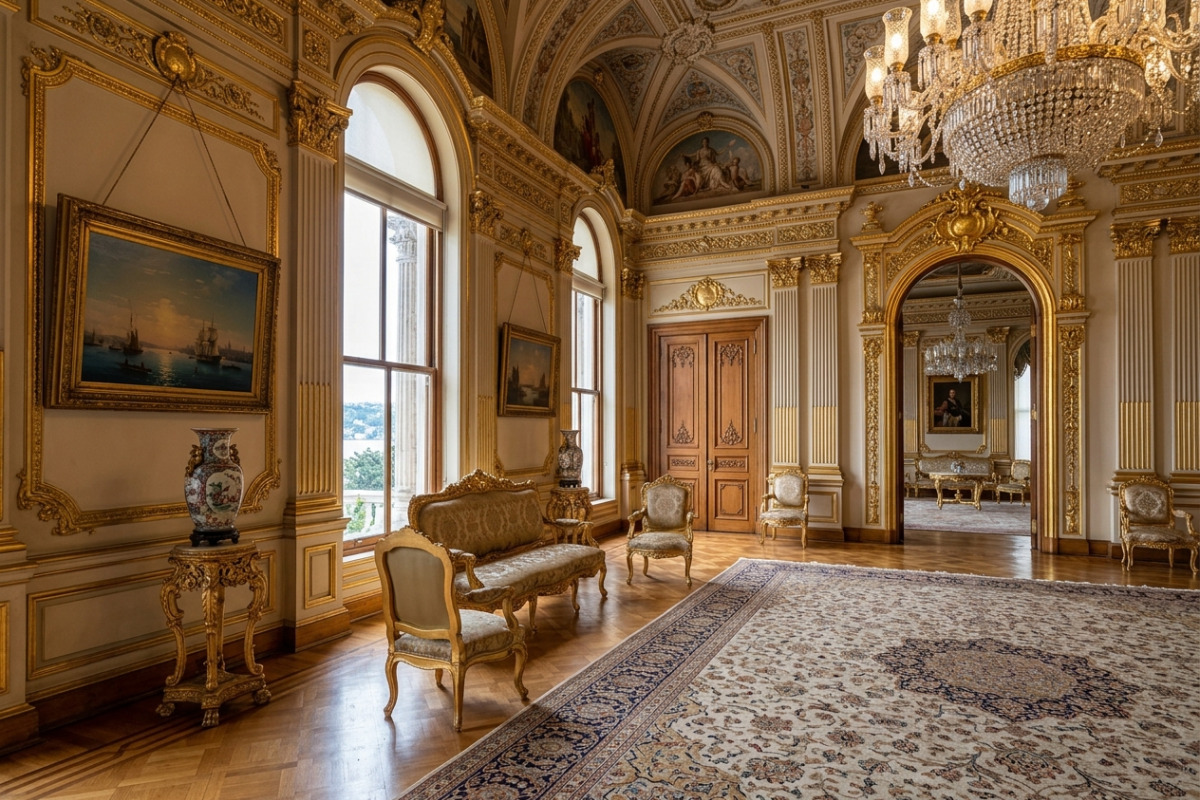
The interiors of Dolmabahçe Palace are as impressive as its facade. Marble staircases, gilded details, and large windows illuminate the palace's interior. Notably, the grand chandelier in the Muayede Hall is one of the palace's most striking features. Weighing 4.5 tons and made in France, this chandelier symbolizes the palace's magnificence.
Each detail within the palace tells a story. For instance, the Ottoman motifs and frescoes on the walls reflect the aesthetic understanding and art of the period. Dolmabahçe Palace is not just a center of administration but also resembles an art gallery. Its interiors are filled with works created by artists of the time, playing a significant role throughout the palace's history.
Points of Interest in Dolmabahçe Palace
Dolmabahçe Palace offers numerous beauties for visitors to explore. The palace's gardens are as enchanting as its interiors. The gardens provide a space for relaxation and an experience in harmony with nature, allowing visitors to connect more deeply with the history and architecture of the palace. Other structures surrounding the palace enrich this historical experience.
If you are considering visiting Dolmabahçe Palace, don’t forget to check the visitor information. Additionally, it would be beneficial to explore the sections of the palace to discover its various parts. To purchase tickets, click here.
In Conclusion
Dolmabahçe Palace continues to enchant its visitors with its architectural riches and historical texture. Every corner of the palace tells a story that spans from the past to the present. If you are interested in architecture and history, make sure to set aside a day to explore this magnificent structure. For more information about the history and architectural details of Dolmabahçe Palace, you can review its history.
Related Posts
Back to All Posts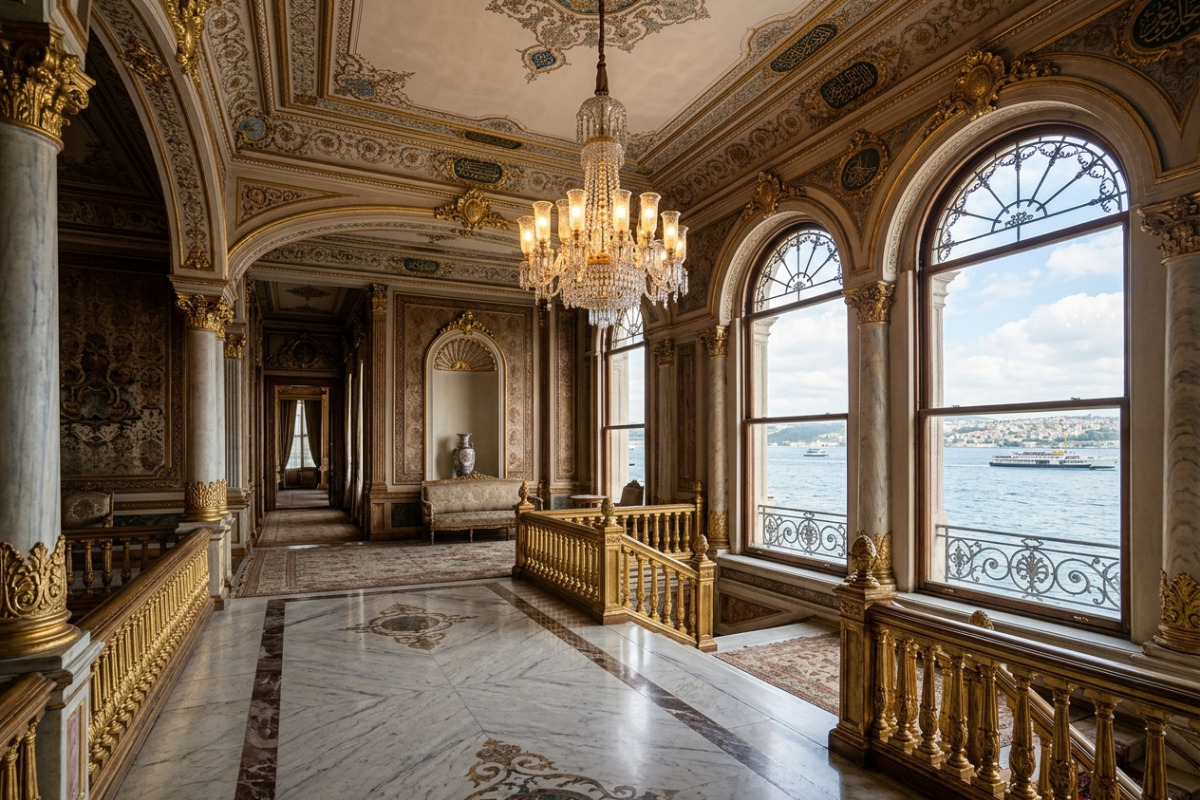

Browse Other Stories
Discover the history in other corners of the palace.